
By: Syed Huzaifah Ali Nadwi, Cambridge.
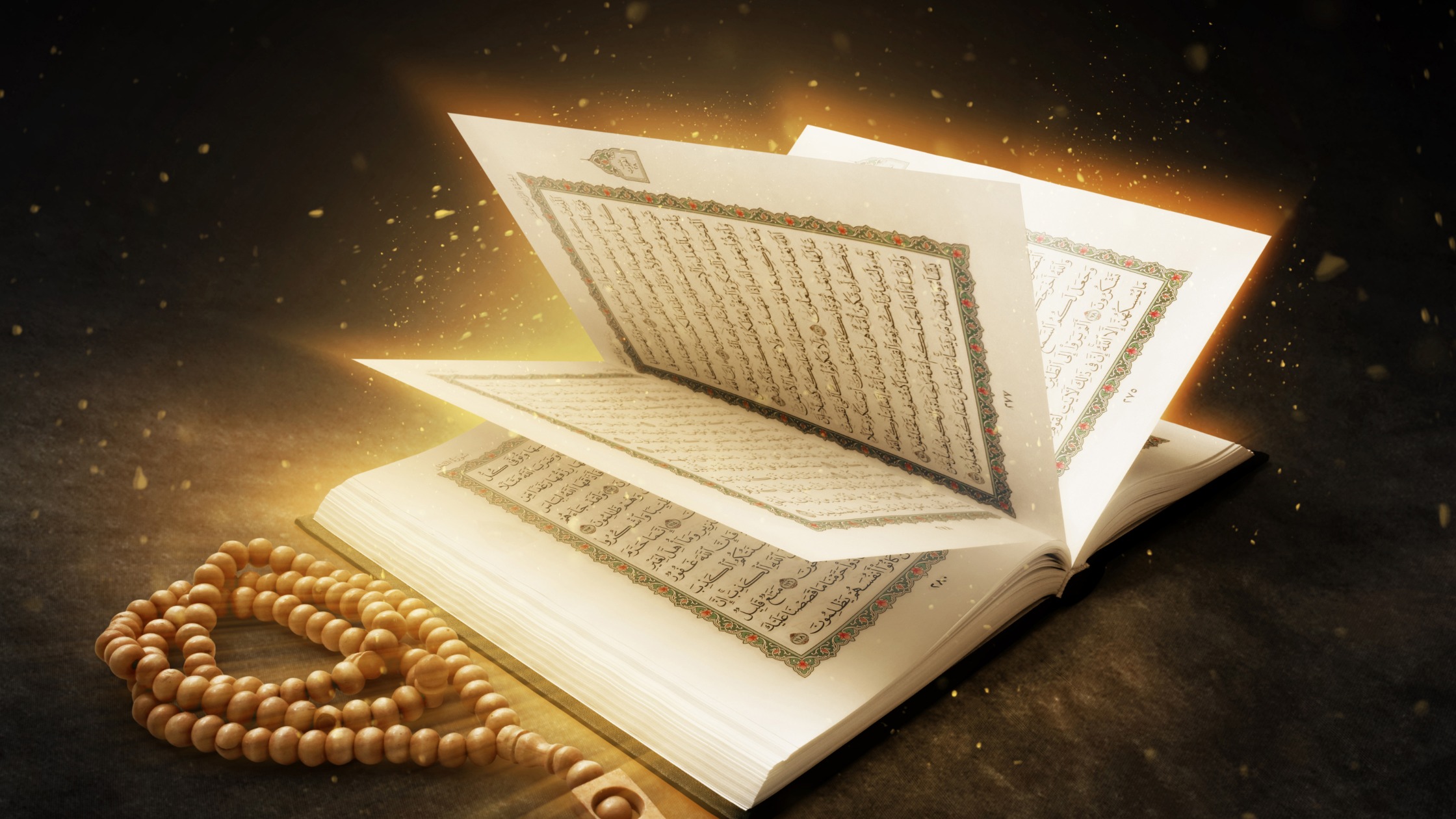
In recent times, much emphasis has rightly been placed on understanding the Qur’an—pondering over its meanings, studying its tafsīr, and engaging with its guidance in our daily lives. This is a noble call and one that should be welcomed, for the Qur’an was revealed to be reflected upon, not merely recited in haste. Allah Himself declares: “This is a blessed Book which We have revealed to you, so that they may reflect upon its verses, and those of understanding may take heed” (Ṣād 38:29). He also asks, “Do they not then reflect upon the Qur’an?” (Muḥammad 47:24). Reflection is not a modern trend; it is the Qur’an’s own invitation. Slow, careful recitation and an intent to act on what we read is the Prophetic way.
Yet, in highlighting the importance of understanding, some have unfortunately gone to the opposite extreme—belittling the memorization of the Qur’an. Remarks are sometimes heard such as, “Memorization is not real knowledge,” or “It is more important to know the meaning than to commit words to memory.” Such statements, though perhaps well-intentioned, miss what makes the Qur’an unique. The Book of Allah is not like any other book. It is the Word of Allah carried in living hearts and passed on with sound, sense, and trust. The Qur’an itself speaks of verses being “in the chests of those who were given knowledge” (al-ʿAnkabūt 29:49). To look down on ḥifẓ is to overlook a central way by which Allah preserved His Book.
Memorization (ḥifẓ) of the Qur’an has been one of the greatest protections of this ummah. From the earliest days until now, children and elders devote themselves to it, preserving the text letter by letter and vowel by vowel. No other scripture has this living chain of reciters. The disciplines of tajwīd, the qirāʾāt, attention to makhārij and waqf, and the habit of revision (murājaʿah) make memorization precise worship, not empty rote. “We have certainly made the Qur’an easy for remembrance” (al-Qamar 54) is not just encouragement; it is a description of how Allah has opened the door. The result is a community bound together by a shared text that is heard, reviewed, and renewed every day.
At the same time, it is undeniable that memorization alone is not the goal. The Prophet ﷺ nurtured a community that recited, understood, and lived the Qur’an. A balanced approach is required: keep building ḥifẓ, and keep opening the meanings. In practice this can be simple and steady—learning key words for each sūrah, noting the main theme before starting a page, knowing why a verse was revealed (where known), and asking, “What does this change in my prayer, my speech, or my choices today?” Even short sūrahs, memorized with their meanings, can turn daily prayers into moments of clarity and calm.
In the UK today, the growing number of ḥuffāẓ is something we should be grateful for. Across mosques and madrasahs, children from diverse backgrounds carry the Qur’an in their hearts. This blessing deserves support and direction. Our institutions can do a few practical things: pair ḥifẓ classes with a weekly meanings circle; examine fluency and basic comprehension together; train teachers to highlight a handful of key terms per lesson; and give parents simple guides for home—five minutes of revision, one theme, one small action. For teenagers and adults, connect memorized passages to ethics, family life, study habits, and service. This keeps ḥifẓ alive after completion and prevents it from becoming a distant memory.
A striking example of dedication to the Qur’an can be found in the thousands of quiet teachers across the world who sit with students day after day, listening, correcting, and encouraging. Much of the Qur’an’s preservation rests on their patience and hidden service. One example is Qārī Bashīr in Madinah, who has spent over sixty years listening to recitation in the Prophet’s City. His life shows what this work looks like at ground level: steady presence, careful correction, a smile for the nervous child, and a standard that does not slip. Through such teachers—well known and unknown—the Qur’an is preserved with voice and character together.
Therefore, the path forward is clear: we must not reduce the Qur’an to “only memorization” nor to “only understanding.” Rather, we must hold both. Memorization safeguards the text; understanding brings it into action. Together, they form the profile of a true bearer of the Qur’an—the one the Prophet ﷺ praised when he said, “The best of you are those who learn the Qur’an and teach it.” A simple rule helps: every page we learn should teach us one thing to do, one habit to leave, and one blessing to thank Allah for. In this way, ḥifẓ becomes a doorway to guidance, not a finish line.
May Allah make us people of balance, who neither belittle the gift of ḥifẓ nor neglect the responsibility of tadabbur. May He make the Qur’an the spring of our hearts, the light of our chests, and the remover of our worries. May He honour our teachers—those whose names we know, and the many whose names only He knows—and allow us and our children to serve His Book with precision, understanding, and beautiful conduct.

Mashallah tabarakallah. This makes so much sense.
Salam dear Maulana Huzaifah JazzakAllah Allah for this balanced approach to the study of Quran. I will be happy to work with you to develop a course for huffaz that will teach them meaning and message of the divine writ.
Please contact me Musharraf.hussain@karimia.com
Walaikum Assalam,
JazakAllahu khayran for your message. InshaAllah, I will reply properly after Ramadan.
Huzaifah