
By Syed Huzaifah Ali Nadwi, Cambridge
This piece responds to the recent discussion initiated by our dear friend and respected scholar Dr. Yasir Qadhi on how the historical-critical method (HCM) and its offshoots such as isnād-cum-matn analysis (ICMA) are employed in contemporary ḥadīth studies.
I’m engaging the question rather than the person—with respect and appreciation—because the issues deserve clarity and calm. And to be clear, I welcome this conversation. Many of us who move between dars-i-niẓāmī training and university spaces don’t always pause to audit the assumptions we carry both ways. I’ve discussed these questions with teachers and colleagues for some time; this moment is a good opportunity to air them thoughtfully and learn together. In what follows, I try to keep the register sober and constructive, asking how methods travel across domains and what is gained—or lost—when they do. My reflections on these issues are longstanding; they have become sharper over the years of study, especially through doctoral work on Shāh ʿAbd al-ʿAzīz al-Dehlawī (d. 1823) and the Madrasah Raḥīmīyah, where close engagement with English-language studies shows how framing and translation steer conclusions. And because this exchange was raised by Dr. Yasir Qadhi, I offer these thoughts in a spirit of collegiality and care.
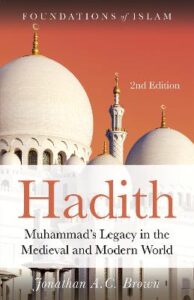
In recent decades, interactions between traditional Islamic scholarship and Western academia have yielded real gains. Yet important differences remain—especially around who sets the terms for credible knowledge about Islam. Historically, Western study of Islam matured within colonial frameworks, and that legacy still shapes what counts as “serious” research through publication incentives, hiring, and peer-review norms (Said 1978). None of this cancels genuine contributions; it simply asks us to name the frame. Put differently, the setting in which questions are asked often guides the answers that seem reasonable. Jonathan A. C. Brown captures this dynamic with exemplary clarity:
“Western criticism of the hadith tradition can be viewed as an act of domination in which one worldview asserts its power over another by dictating the terms by which ‘knowledge’ and ‘truth’ are established… The Authenticity Question is part of a broader debate over the power dynamic between ‘Religion’ and ‘Modernity,’ and between ‘Islam’ and ‘the West’.” (Brown 2009, 199)
A second backdrop is methodological. In social-science spaces I’ve inhabited, there are clear strengths—careful ethnography, helpful typologies—but also overreach: small-N findings get scaled into grand theses; survey instruments smuggle theory into “data”; coding schemes compress nuance into pre-approved categories. That doesn’t make the disciplines useless; it reminds us that methods are theory-laden and shaped by incentives. It also matters when sweeping claims are made about “what the academy accepts” regarding ḥadīth. A modest principle helps: where the evidence is thin, the claims should be thin too.
At the same time, the academy is not a single voice. Different departments and subfields reach different conclusions—some markedly sceptical, others cautiously affirmative, and still others foreground the evaluations of early Muslim critics themselves. To be clear, the Western study of ḥadīth is far from monolithic: non-Muslim scholars reach very different judgments—Gregor Schoeler on early writing practices, Nabia Abbott’s pioneering work on early codices and documentary culture, Herbert Berg’s typologies of Western approaches (covering both sceptical and more sanguine perspectives—he frames them more as two poles rather than a spectrum), and Scott C. Lucas’s analyses of the internal logics of classical criticism all illustrate the range. Likewise, Miklós Murányi’s codicological work on early Mālikī manuscripts—especially the Qayrawān/Kairouan corpus—maps transmitter layers and scribal strata and corroborates early juristic debates, further complicating late-projection claims. The point is simple: the field is not monolithic, so sweeping claims about what “the academy” accepts are inaccurate. The claim that “no one in academia accepts X” therefore overstates matters; strands exist that are sceptical, others that are cautiously affirmative, and still others that take the classical critics’ judgments seriously on their own terms. For example, Harald Motzki’s isnād-cum-matn analysis (ICMA) dates reports by jointly tracking transmitter clusters and textual variants, often identifying early strata in sources like ʿAbd al-Razzāq’s Muṣannaf; it then analyses distinctive features and stylistic patterns within clusters, and cross-checks them with Muslim biographical data (Motzki 1991; 2002). While the exact implications of this work are debated, it marks a clear divergence from the hyper-scepticism that dominated much of Western ḥadīth studies before the late 1980s; since then, a number of other scholars have advanced approaches that challenge, refine, and add nuance to this scepticism, and much work remains to be done in the field. Relatedly, insider and outsider perspectives need one another: an emic formation protects a discipline’s aims, while an etic distance can expose blind spots. By “emic” I mean judgments made from within a tradition’s own aims and categories; by “etic,” judgments made from an external analytic vantage. This mirrors a long conversation within the American Academy of Religion about giving space—side by side—to confessional/theological inquiry and the social-scientific study of religion, so long as each is clearly signposted.
The muḥaddithūn’s method is self-sufficient in meeting the rational and theological aims it was designed to address, while clearly identifying the limits of its truth-claims based on real-world constraints and the possibility of human error, as is well known to students of ḥadīth and kalām. Any subsequent inquiry, whether by historians or social scientists, may offer ancillary context, but will always be limited by the assumptions, constraints, and goals of those disciplines and their methods. When collaboration or dialogue does occur, the goal should be complementarity, not epistemic hegemony. And we should remember that master-critics still live among us: for example, the late ḥadīth authority of Mazāhir ʿUlūm, Sahāranpūr, Shaykh Yūnus Jaunpūrī (raḥimahullāh)—whom I had the blessing to meet and benefit from—embodied the caution, breadth, and independence the discipline demands. I have recently completed an English translation of his biography; voices like his remind us that contemporary expertise often remains under-recognised.
In that light, a gentle clarification about language is useful. Describing the classical method as “faith-based” or a “leap of faith” blurs categories. The right distinction is between creed and craft: confessional belief in Islam’s truth-claims on the one hand, and the evidentiary procedures by which attribution is tested on the other. The former is indeed a matter of faith; the latter is not. One may believe or disbelieve in Islam and still recognise when a community has built a disciplined way of weighing testimony.
The rational core of ḥadīth criticism is well known: scrutiny of continuity and proximity of transmission (isnād), narrator uprightness (ʿadālah) and precision (ḍabṭ), internal coherence of the text (matn), and external convergence (mutābaʿāt/shawāhid), alongside a taxonomy of error and fabrication (e.g., shudhūdh, ʿillah, tadlīs). Within this method, reports are graded, weighed, and sometimes restricted in legal or theological use. Brown surveys these criteria and the centuries-long internal debates that refined them (Brown 2009, chs. 2–3, 8). For readers outside the field: isnād asks “who told whom, and could they have met?”; matn asks “does the content cohere with stronger evidence?”—two questions at the heart of any responsible historical inquiry.
In practice, this is a highly technical, cumulative science pursued not only through scrutiny of biographical information about narrators (fann al-rijāl), but also through rigorous content analysis of the reports emerging from each source; side-by-side comparison of variant wordings (muqāranat al-riwāyāt); and the identification and explanation of divergences and contraventions (mukhālafāt)—often by reconstructing narrative contexts and transmission histories. Crucially, content criticism (naqd al-matn) is separate from narrator/chain criticism (naqd al-isnād / naqd al-ruwāt): the former tests content against stronger textual and rational evidence, chronology, and usage, while the latter verifies continuity and plausibility of transmission (including tests of liqāʾ) and the narrator’s ʿadālah and ḍabṭ. The two tracks spawned distinct tools and literatures, spanning ‘ilal, su’alāt, mukhtalif al-ḥadīth, asmā’ al-rijāl, tabaqāt, jarḥ wa-taʿdīl, among others, but were conjoined and applied together to reach a ruling or offer critique.
For why early critics did systematic matn criticism—and why it can be hard to surface in our sources—see Jonathan A. C. Brown, “How We Know Early Ḥadīth Critics Did Matn Criticism and Why It’s So Hard to Find”; compare Ibn al-Qayyim al-Jawziyyah’s al-Manār al-Munīf fī al-Ṣaḥīḥ wa-l-Ḍaʿīf for applied criteria. It is easy to miss how deeply multifaceted this science is: early muḥaddithūn amalgamated a range of approaches (see Imām Muslim’s Kitāb al-Tamyīz) to arrive at conclusions regarding the status of narrations and narrators. For a contemporary window into the craft, Shaykh Muḥammad Yūnus Jaunpūrī’s al-Yawāqīt al-Ghāliyyah offers detail that can prompt one to rethink what one has studied—or thought one knew—about the complexity of the critical tools and approaches that were adopted by the early ḥadīth scholars.
These principles were never abstract; they found their most rigorous expression in the practice of the great ḥadīth critics. Imām al-Bukhārī (raḥimahullāh) exemplifies this historical consciousness at its finest. His conditions—requiring plausible contact (liqāʾ) where relevant, interrogating ʿanʿanah, probing hidden defects (ʿilal), and seeking corroboration—reflect disciplined rational inquiry. He did not merely preserve texts; he evaluated people, proximity, reliability, and convergence, assembling layered cases for credibility. If history seeks responsibly mediated knowledge of the past, then the muḥaddithūn—particularly Bukhārī—stand among civilisation’s great historians. The point is simple: caution about sources is not a modern invention.
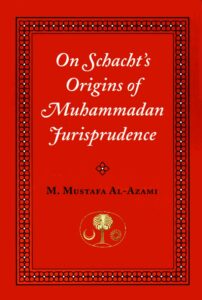
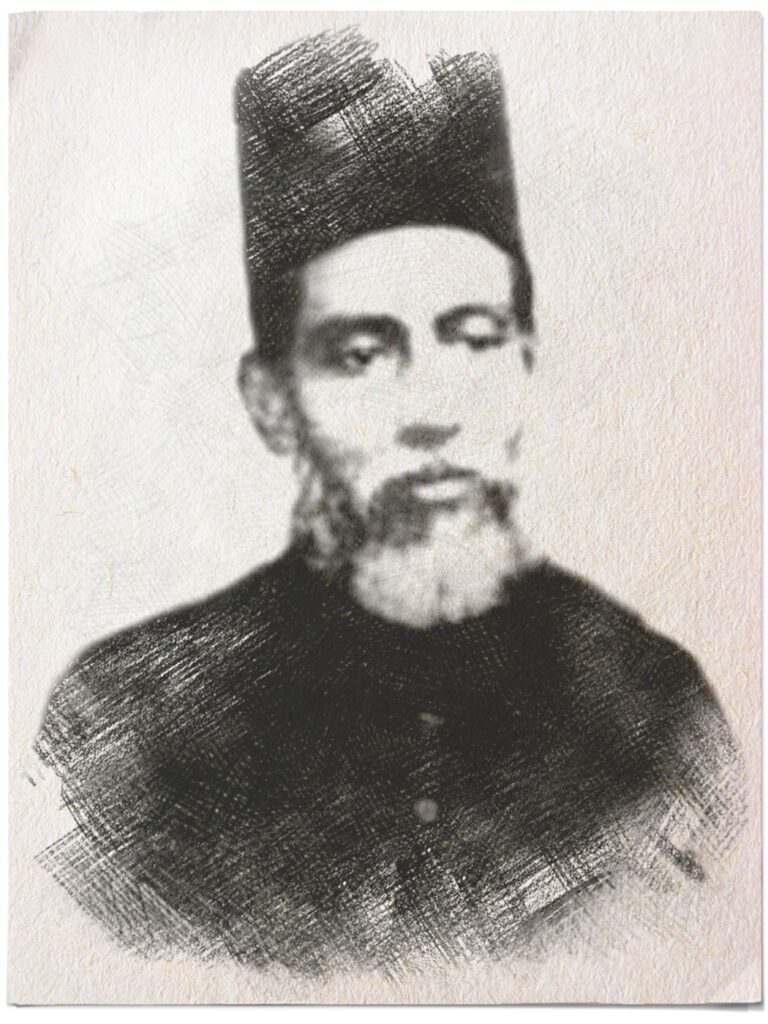
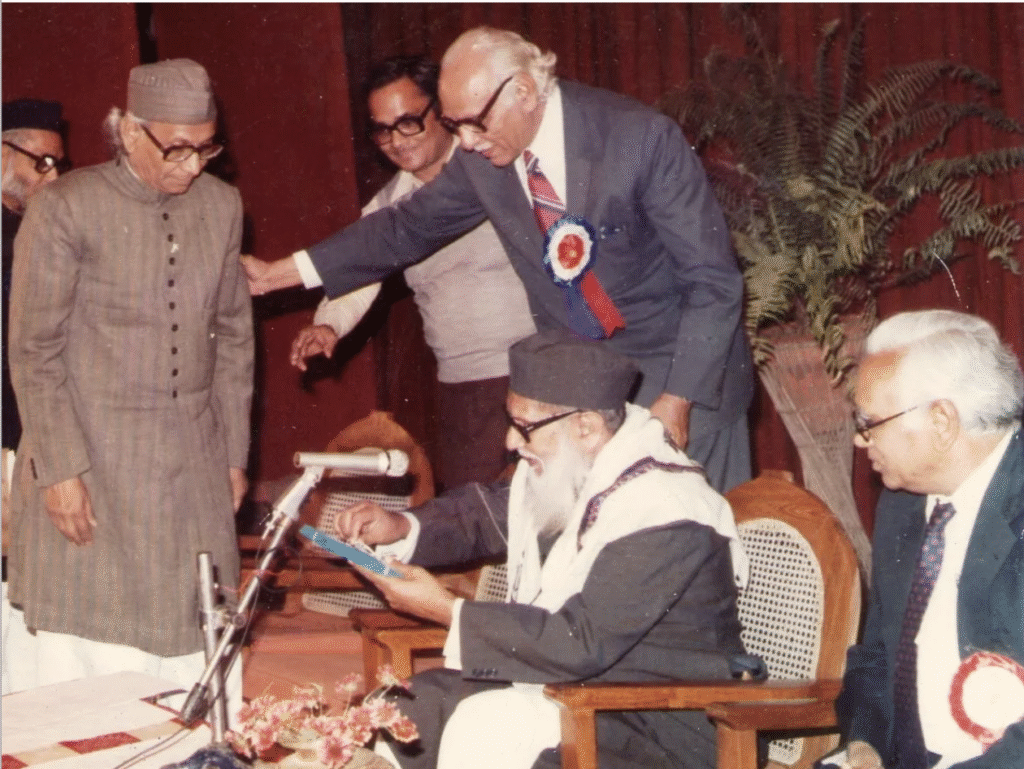
Much modern hyper-scepticism inherits earlier theses (e.g., that legal content was largely projected back onto the Prophet ﷺ). Here Shaykh Muḥammad Muṣṭafā al-Aʿẓamī (raḥimahullāh) is pivotal: he documents early legal activity and first/second-century writing practices; clarifies that isnād functioned as quality control rather than literary ornament; and exposes over-reliance on arguments ex silentio and selective sampling (al-Aʿẓamī 1996). Read against the tradition’s own evidentiary habits and the cumulative discovery of early materials, sweeping reconstructions falter. To doubt everything because some things are doubtful is not a method at all.
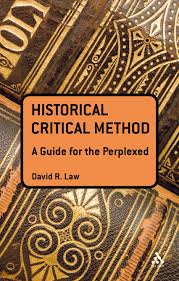
Because the historical-critical method often sits at the centre of these debates, it helps to register how scholars of religion themselves have reassessed it. For clarity: by HCM I mean the family of approaches that bracket theological claims in order to ask historical ones. David R. Law observes that HCM’s “scientific” posture—detached, value-neutral, purged of theology—rests on its own Enlightenment commitments (rationalism, positivism, historicism). In that sense, it is not worldview-free and can silently pre-select which readings remain thinkable (Law 2012, 224). Law also cautions that HCM need not undermine praxis: situated within understanding and explanation, rather than eclipsing application, it need not displace theological reasoning (2012, 232–33). His conclusion is balanced: HCM should neither claim hegemony nor be discarded; it is valuable as one voice among others, helping to protect the text’s “rights,” but it should be integrated into a broader hermeneutic rather than crowned as sole arbiter (2012, 237). That is also how classical Muslim scholars treated their own tools: indispensable, yet not omnipotent. For a complementary map of how “Islamic Studies” has been framed in Europe—and why hybrid institutions and ambiguity-tolerant scholarship matter—see Shaykh Abdal Hakim Murad’s lecture, How Islamic is Islamic Studies? The Troubled History of an Academic Discipline in Europe (Aziz Foundation Inaugural Professorship): https://www.youtube.com/watch?v=cGNyFVXrBqs.
Comparable internal critiques appear well beyond Islamic studies—for example, “rethinking global history” projects interrogate Eurocentric periodisation and evidentiary rules. Within our own field, scholars such as Sohaira Siddiqui and SherAli Tareen model ways to surface hidden categories, methodological shifts, and archive-imposed limits, complementing the classical balance between isnād discipline and matn analysis. Comparative religion has made similar moves—including debates in Buddhist studies over positivist philology—helping to keep methods honest.
All of this sits inside a wider question: the politics of knowledge. As Said argued, knowledge is entangled with power and policy; institutions are never entirely neutral (Said 1978). Recent humanitarian crises have made this visible. Scholars who expressed principled positions on mass suffering have, at times, faced reputational or employment costs, chilled speech, or publication gatekeeping. One need not list cases to recognise the pattern: “academic freedom” is variably applied, and claims to objectivity are constrained by political climate. From seminar rooms and archives one also sees subtler pressures: “safe” topics are rewarded; caution can masquerade as neutrality; certain frames travel faster through peer review. Naming those constraints is candour, not cynicism. Acknowledging pressures does not deny integrity; it explains why certain arguments prosper and others do not.
A final practical note concerns expertise formation. Inside the tradition, competence in ḥadīth is not just facility with languages or archives; it is apprenticeship in uṣūl al-ḥadīth and uṣūl al-fiqh, habits of evaluation (jarḥ wa-taʿdīl), sensitivity to genre, attention to ʿilal, and an ethic of caution in deployment. Absent that formation, even gifted academics can mis-specify what ḥadīth criticism is for—confusing descriptive social history with the tradition’s normative task of stewarding reliable testimony. Brown notes that attitudes toward authenticity often track starting assumptions as much as brute data; al-Aʿẓamī shows how close reading and internal evidence can challenge those assumptions (Brown 2009; al-Aʿẓamī 1996). My own work on colonial-era Qurʾānic interpretation has reinforced this: when external taxonomies are applied without the discipline’s internal norms, a tradition’s self-understanding is quietly reordered. The remedy is not retreat but principled pairing: invite rigorous outside tools into an insider-governed evaluative frame. This is stewardship, not defensiveness.
Two temptations are worth resisting. First, validation anxiety: the urge to secure external imprimatur for disciplines that already possess mature standards. Orientalism helps explain why such anxiety arises and why it should be tempered (Said 1978). Second, blanket dismissal of academic work. The aim is not to refuse tools but to integrate what genuinely clarifies—without importing hierarchies that delegitimise a living lineage. Rhetorically, that means retiring sweeping lines and preferring calibrated ones. Precision protects public confidence, honours colleagues doing careful work, and keeps conversation open. Disagreement, expressed precisely, is a service to the community.
Constructively, we can: (i) create protected spaces for serious internal discussion—seminars, consortia, private circles—where complex issues can be tested without destabilising public confidence; (ii) collaborate across the emic/etic seam with scholars who respect the tradition’s premises; and (iii) invest in translation and editorial projects to reduce asymmetries of access that often fuel outsider gatekeeping. Beyond Islamic studies, contemporary historiography is also re-examining inherited critical habits—arguing for plural evidentiary standards, context-sensitive inference, and reflexivity about archival silences. As Gayatri Chakravorty Spivak asked—“Can the Subaltern Speak?”—archives can enact “epistemic violence,” scripting whose voices count as knowledge and whose are rendered inaudible; reading “against the grain” is one way to resist that silencing. Those moves resonate with the classical balance between isnād discipline and matn analysis. In short: keep what clarifies, rethink what constrains.
A quieter hazard is performative sophistication: sentences so elegant and theory-laden that cadence outruns proof. The page may dazzle, but the footing—evidence, warrants, precise claims—is thin, and fashionable vocabulary does work that argument should do. On ḥadīth and its history, style is welcome; it cannot replace demonstration. Readers deserve to see what has been established—and on what grounds. Clarity is not anti-intellectual; it is a courtesy to the reader and a discipline for the writer.
Finally, a closing note on adab—not mere decorum, but the discipline of language. Public speech shapes public confidence. In a media ecosystem shaped by plausibility structures—the networks of trust, platforms, and cues that make certain claims feel “right”—phrases travel faster than corrections. Broad or ambiguous phrases about the standing of ḥadīth—however unintended—can unsettle lay readers and obscure the tradition’s methodological sophistication. Loose statements in the public sphere quickly harden into received wisdom, especially when audiences encounter only a three-minute clip or a shareable soundbite; careful, longer replies rarely catch up. Precision (especially in English, with its own registers and connotations) preserves trust while allowing serious debate to continue. The task is not to choose between tradition and academic inquiry as if they were necessarily competing paradigms, but to give each its rightful place in equitable and respectful dialogue. In brief, the argument is simple: the classical ḥadīth method is a disciplined historical science, and “the academy” is neither monolithic nor a final tribunal of truth.
May this discussion move us a little closer to that balance, and may Allah bless our friend Dr. Yasir Qadhi for prompting a conversation that was long overdue.
References
Al-Aʿẓamī, Muḥammad Muṣṭafā. 1996. On Schacht’s Origins of Muhammadan Jurisprudence. Cambridge: Islamic Texts Society.
Brown, Jonathan A. C. 2009. Hadith: Muhammad’s Legacy in the Medieval and Modern World. Oxford: Oneworld Publications. (esp. p. 199; chs. 2–3, 8).
Law, David R. 2012. The Historical-Critical Method: A Guide for the Perplexed. London: Bloomsbury T&T Clark. (pp. 224–237).
Motzki, Harald. 1991. “The Muṣannaf of ʿAbd al-Razzāq al-Ṣanʿānī as a Source of Authentic Aḥādīth of the First Century A.H.” Journal of Near Eastern Studies 50(1): 1–21.
Motzki, Harald. 2002. The Origins of Islamic Jurisprudence: Meccan Fiqh before the Classical Schools. Leiden: Brill.
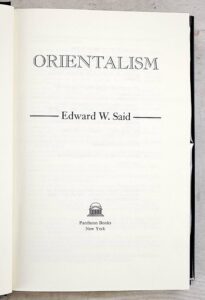
Said, Edward W. 1978. Orientalism. New York: Pantheon Books.

Thank you for this article.
As-salamu alaykum and jazak Allah for initiated this much needed discussion. In the “Introduction” to the first volume of our Integrated Encyclopedia of the Qur’an (IEQ, I had raised the issue of Muslims contributing to the Western /non-Muslim studies of the Qur’an and my dear departed friend, Dr. Zafar Ishaq Ansari and our dear ustadh M. M. Azami had pinpointed the need to work on an asuli framework to continue that discussion. (https://iequran.com/project/intro.php).
Are you interested in a contribution to further this discussion with reference to the Qur’anic Studies?
Well articulated