
Syed Huzaifah Ali Nadwi
Cambridge, UK
There are moments in a community’s intellectual life when an institution remains publicly revered, yet its meaning is quietly displaced. The vocabulary is preserved; the pillar is affirmed; the familiar phrases are repeated. And yet the thing itself, the moral reality of it, has begun to shift. Zakah, I fear, is increasingly placed at risk by this kind of drift.
The problem is not that Muslims deny zakah. On the contrary, we are perhaps more fluent than ever in speaking about it. We calculate it with precision, create campaigns around it, build entire professional sectors upon it, and speak confidently of “impact,” “sustainability,” “empowerment,” and “long-term uplift.” In many places, we have even developed a subtle pride in how modern and sophisticated our zakah infrastructures have become. But religious maturity requires us to ask an earlier question than all of this: what is zakah for?
That may sound too simple, even naïve, in a world trained to think in terms of systems. Yet the Sharīʿah itself teaches that function must precede framework. When function is forgotten, frameworks become the means by which we rationalise our instincts. And because the modern instinct is to treat every resource as capital and every obligation as a mechanism, the temptation grows to interpret zakah primarily through the lens of leverage and growth.
The Qur’an does not speak of zakah as leverage. It speaks of zakah as moral correction. It is not presented as a voluntary act of generosity by the affluent. It is presented as a right embedded within wealth, a right that must be delivered.
Consider the Qur’anic insistence that wealth is never morally private in an absolute sense:
وَفِي أَمْوَالِهِمْ حَقٌّ لِلسَّائِلِ وَالْمَحْرُومِ
“And in their wealth there is a rightful share for the beggar and the deprived.” (Q 51:19)
And again:
وَالَّذِينَ فِي أَمْوَالِهِمْ حَقٌّ مَعْلُومٌ لِلسَّائِلِ وَالْمَحْرُومِ
“And those whose wealth contains a known right for the beggar and the deprived.” (Q 70:24–25)
This language matters. It shifts the moral centre of the discussion. Zakah is not “my donation.” It is not philanthropy. It is not a personal kindness. It is farḍ. It is an obligation owed to Allah, and a right owed to those whose deprivation the Qur’an refuses to romanticise.
The Qur’an’s concern with economic concentration is not merely descriptive; it is normative. It speaks with unease about wealth becoming a closed circuit:
كَيْ لَا يَكُونَ دُولَةً بَيْنَ الْأَغْنِيَاءِ مِنْكُمْ
“So that it does not merely circulate among your rich.” (Q 59:7)
Even though this appears in the context of communal wealth distribution, the moral logic cannot be missed. The Qur’an does not want a society in which wealth is a private carousel for the affluent, while the vulnerable survive on precarious margins. Zakah is among the instruments by which that carousel is disrupted.
There is perhaps an instructive parallel here with the function of the Friday khuṭbah. At one extreme, it becomes detached from the lived realities of the community — abstract, distant, and irrelevant. At the other extreme, it becomes performance — polished, emotive, topical, yet subtly theatrical. In both cases, the original function is displaced. The khuṭbah was legislated as remembrance, admonition, moral recalibration — not as spectacle, and not as empty ritual. Zakah faces a similar risk. If it becomes administratively efficient yet spiritually hollow, or strategically ambitious yet morally displaced, then like the misdirected khuṭbah, it may retain its structure while losing its soul.
And yet, we increasingly live in a moment where zakah is being discussed and sometimes deployed in a manner that risks reabsorbing it into precisely the kind of affluent enclosure the Qur’an warns against. The language of “investment” has entered the zakah imagination. In some circles, zakah is spoken of as seed capital, as a development fund, as a tool for growth, as a pathway toward institutional sustainability. We hear of zakah as if it were a portfolio.
Some have extended this reasoning further, arguing that the Qur’anic category of al-muʾallafah qulūbuhum permits the allocation of zakah toward political actors or campaigns in order to influence policy and secure benefit for the Muslim community. Classical jurists did indeed discuss circumstances in which leaders of influence were given funds to repel harm or secure stability. Yet even within that juristic discourse, such allocations were treated as contextual instruments, not as the defining face of zakah. The verse itself begins not with influence but with deprivation. Hermeneutically and morally, this ordering is not incidental.
This is where the ethical tension becomes unavoidable. There is a difference between using zakah wisely and using zakah as an institutional growth engine. There is a difference between equipping a poor person with what will restore dignity and independence, and treating zakah itself as capital to be “worked” so that it can generate returns. The first keeps the recipient at the centre; the second risks shifting the centre to the institution.
At this point, a defensible critique must be honest and careful. Islamic law is not simplistic. It is not blind to the complexity of poverty. It recognises that need is not always solved by immediate cash distribution. It recognises debt, cyclical hardship, the structural factors that trap people. It has categories broad enough to accommodate real-world complexity, as in the famous verse of recipients:
إِنَّمَا الصَّدَقَاتُ لِلْفُقَرَاءِ وَالْمَسَاكِينِ وَالْعَامِلِينَ عَلَيْهَا وَالْمُؤَلَّفَةِ قُلُوبُهُمْ وَفِي الرِّقَابِ وَالْغَارِمِينَ وَفِي سَبِيلِ اللَّهِ وَابْنِ السَّبِيلِ
“Zakah expenditures are only for the poor, the needy, those employed to administer it, those whose hearts are to be reconciled, for freeing slaves, for those in debt, in the path of Allah, and for the stranded traveller.” (Q 9:60)
Yet the existence of legitimate breadth is not a licence for moral displacement. The verse begins where the Qur’an wants our attention to begin: with the poor and destitute.
Even where jurists upheld the continuing validity of the muʾallafah category, they did not invert the hierarchy of zakah. Influence was treated as secondary to need. Exceptional allowances were never meant to become normative structures. What begins as contextual ijtihād can, if unguarded, become habitual policy.
This is the crux of the problem: when people are hungry, unclothed, homeless, unable to heat their homes, crushed by rent arrears, strangled by debts contracted through necessity, it is morally grotesque to speak casually of “investment models” for zakah. One can argue technical permissibility for many things, but the Sharīʿah’s moral architecture consistently privileges the removal of harm and the urgent relief of hardship. The ethical shape of zakah is not futuristic. It is immediate. It is a response to deprivation that exists now.
What has made the contemporary drift particularly dangerous is that it coincides with a thinning culture of voluntary giving. Many Muslims have come to treat zakah as the entirety of their financial religion. They discharge it once a year, experience a sense of spiritual completion, and move on. But zakah is not the summit of generosity. It is the minimum. It is the floor, not the ceiling.
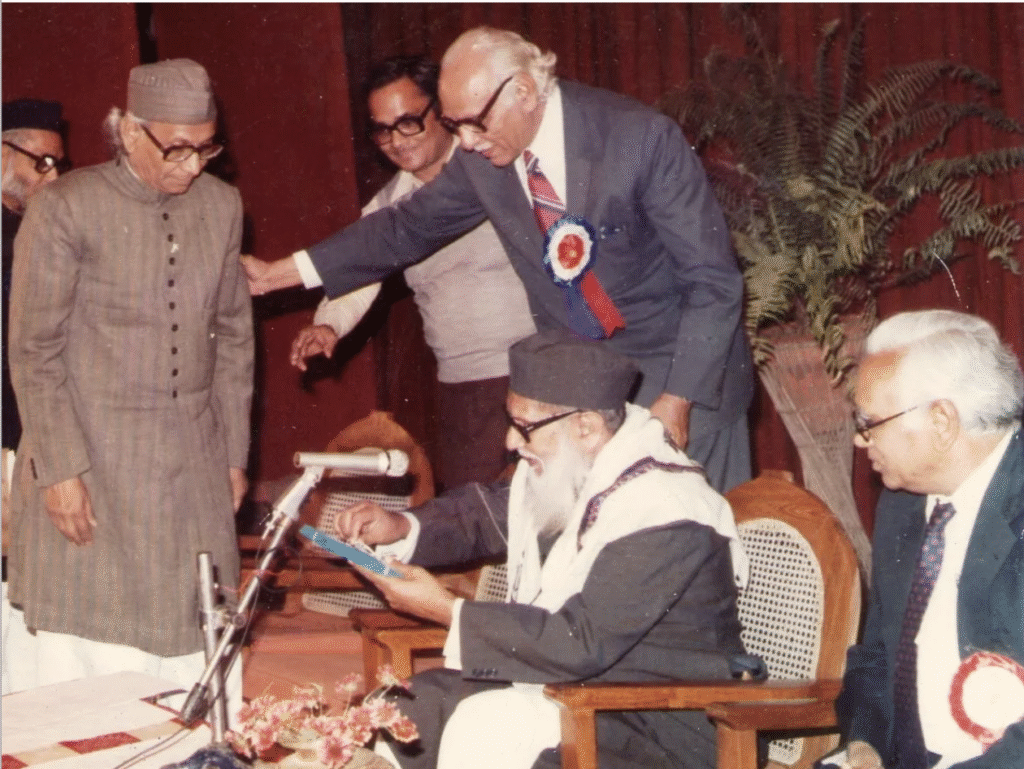
During a recent visit to Canada, my father-in-law, Mawlānā Mohammad Fazlur Rahim Mujaddidi Sahab (the current General Secretary of the All India Muslim Personal Law Board), made a remark that has continued to unsettle me and deepen my reflection on this issue. He observed that in many communities we have spoken about zakah so frequently, structured it so thoroughly, and institutionalised it so extensively that people now subconsciously equate it with charity itself. Zakah has come to stand in for generosity. Once it is discharged, the conscience rests. Yet zakah is not charity in the fuller spiritual sense; it is obligation. Charity, in its deeper meaning, lies beyond compulsion. It is that voluntary giving in which one feels the cost. The Prophet ﷺ alluded to this higher station when he taught that the upper hand is better than the lower, and when he described the most virtuous charity as that which is given while one is still attached to wealth and fears poverty. True ṣadaqah carries the trace of sacrifice; it unsettles the nafs; it leaves one aware that something has been relinquished for Allah. When zakah alone becomes the horizon of giving, what was meant to be the minimum threshold of justice quietly replaces the expansive ethic of generosity that once sustained Muslim civilisation.
This shift has civilisational consequences. Historically, Muslim societies built their great public institutions not by stretching zakah until it became indistinguishable from a general charity budget, but through ṣadaqah and waqf: voluntary generosity and endowment. Zakah ensured that the poor were protected as a matter of right. Waqf, by contrast, funded long-term public benefit. Ṣadaqah supplied the surplus of compassion that goes beyond obligation.
It is also worth noting that where political advocacy or policy engagement is deemed necessary, the permissibility of funding such efforts through general ṣadaqah is rarely disputed. The existence of a flexible and voluntary avenue for such causes only strengthens the argument for restraint with zakah. When a lawful vehicle already exists outside obligation, the burden of redefining obligatory funds becomes heavier, not lighter.
When a community forgets this architecture, it begins to lean on zakah to fund everything: welfare, institutions, growth, projects, programmes, expansion. Then it becomes almost inevitable that “investment logic” will appear, because institutions need cashflow and durability. But the danger is that zakah, which exists to dignify the vulnerable, begins to serve the stability of the institution. The recipient becomes mediated out of the transaction. The poor shift from being holders of a right to being beneficiaries of someone else’s model.
This raises not only ethical questions but also juristic ones. Classical fiqh discussions on tamlīk (transfer of ownership) are partly motivated by a protective moral instinct: zakah should not become merely a pool of communal funds distributed at managerial discretion, detached from the ownership and agency of eligible recipients. Even when the law permits administration and delegation, it resists the erasure of the poor as the centre of gravity.
This is also why showing off corrupts zakah at a spiritual level. When zakah becomes a performance, it ceases to be a humiliation of the ego and becomes its nourishment. The Qur’an’s warnings about spending to be seen are severe:
وَالَّذِينَ يُنفِقُونَ أَمْوَالَهُمْ رِئَاءَ النَّاسِ
“Those who spend their wealth to be seen by people…” (Q 4:38)
And it cautions against invalidating giving through injury and self-congratulation:
يَا أَيُّهَا الَّذِينَ آمَنُوا لَا تُبْطِلُوا صَدَقَاتِكُم بِالْمَنِّ وَالْأَذَىٰ
“O you who believe, do not nullify your charities with reminders and harm.” (Q 2:264)
Zakah is meant to purify. The more we turn it into a means of reputation, institutional branding, or personal achievement, the more we lose the spiritual work that the farḍ was meant to perform inside the giver.
At this point, a serious counter-argument will be raised: is it not permissible to use zakah in ways that produce long-term uplift? Is it not wiser to break cycles of poverty rather than offer repeated subsistence? The answer is that the question is partly misframed. The issue is not whether uplift matters. It does. The issue is hierarchy and moral proportion.
When a poor family requires food now, it is not an intellectual virtue to defer their relief for a projected benefit later. When people require shelter now, it is not piety to divert their right into a programme with outcomes they may never live to see. The Sharīʿah does not ask the hungry to wait for our models.
This is why the most defensible position is not a rejection of intelligent planning but a rejection of inversion: zakah must not be redefined so that its principal meaning becomes development rather than relief. If a form of structured assistance directly serves the poor and transfers real benefit to them, it remains within the moral horizon of zakah. But if the poor become secondary to institutional goals, then the institution has subtly become the recipient.
That is not what zakah is for.
The modern world has trained us to ask what an institution can “produce.” But not every institution of the Sharīʿah is designed for maximisation. Some are designed for restraint. Zakah restrains accumulation. It restrains indifference. It restrains the human tendency to normalise inequality. It forces the affluent to feel, materially, that their wealth is accountable.
When we treat zakah primarily as a tool for “growth,” we impose upon it a foreign telos. We risk turning worship into finance, and obligation into strategy. And we risk reaching the most perverse stage of all: a time when Muslims begin to rationalise directing zakah toward those far from immediate need, while the vulnerable remain unfed. At that point, the question is no longer administrative; it is moral. It is a question of whether the Qur’anic conscience has been replaced by institutional ambition.
Zakah was revealed to prevent a society in which affluence coexists comfortably with destitution. If our zakah ecosystems permit such coexistence to persist while celebrating “impact,” then we have preserved the form and lost the soul.
There is, therefore, a clear corrective. Zakah must be restored to its centre. The poor must return to the heart of our moral imagination. We must recover the civilisational architecture in which zakah is the minimum and ṣadaqah and waqf carry the weight of institution-building and long-term development. Farḍ is not the end of giving, and compliance is not generosity.
Above all, we must restore the discipline of asking about function before framework. If we begin with function, our frameworks will serve revelation. If we begin with frameworks, revelation will be bent to serve our instincts.
And the poor will pay the price.